War Information
12 sectionsHistory of Wars in Palestine
The land of Palestine has long witnessed bloody conflicts and numerous wars. The most significant wars that have directly impacted occupation, displacement, and war crimes in Palestine include:
1. The 1948 War (Arab-Israeli War / Nakba)
Background: Following the Balfour Declaration (1917) and mass Jewish immigration to Palestine under the British Mandate, tensions between Arab and Jewish communities escalated. On November 29, 1947, the UN adopted Resolution 181 to partition Palestine into Arab and Jewish states, which the Arabs rejected. On May 14, 1948, Israel declared independence, and forces from Egypt, Jordan, Syria, Lebanon, and Iraq entered Palestine.
Outcomes and War Crimes: This war resulted in the Nakba (Catastrophe) for Palestinians. Approximately 750,000 Palestinians were displaced from their homes, and over 500 Palestinian villages and towns were destroyed. Massacres included the Deir Yassin massacre (April 9, 1948), carried out by Zionist groups (Irgun and Lehi), killing over 100 women and children. Also, the Tantura massacre (May 22-23, 1948) saw dozens of Palestinians executed. In total, 15,000–30,000 Palestinians were killed or wounded. Israel captured 78% of historic Palestine, leaving only the West Bank (under Jordanian control) and the Gaza Strip (under Egyptian control).
2. The 1956 War (Suez War / Operation Kadesh)
Background: Egypt under Gamal Abdel Nasser nationalized the Suez Canal. Israel, in collusion with Britain and France, attacked Egypt on October 29, 1956, to reopen the Straits of Tiran and eliminate Palestinian fedayeen threats from the Gaza Strip.
War Crimes against Palestinians: On October 29, 1956, Israel committed the Khan Yunis massacre, killing 275 Palestinians (mostly civilians) in the Khan Yunis refugee camp. In the Rafah massacre, 111 Palestinians (including 43 children) were shot dead. Under US and Soviet pressure, Israel withdrew from the Sinai Peninsula and Gaza Strip but allowed UN peacekeepers to deploy.
3. The 1967 War (Six-Day War)
Background: Border tensions between Israel and Syria, Egypt, and Jordan intensified. Nasser requested the withdrawal of UN forces from the Sinai and closed the Straits of Tiran to Israeli shipping. On June 5, 1967, Israel launched preemptive airstrikes against Egypt, Jordan, Syria, and Iraq.
Outcomes and New Occupation: In six days, Israel occupied the Sinai Peninsula, the Gaza Strip, the West Bank (including East Jerusalem), and the Golan Heights. Another 300,000 Palestinians were displaced (the Naksa). Israel later built the separation wall and established illegal settlements in occupied territories. UN Security Council Resolution 242 called for Israel's withdrawal from occupied lands, which has never been fully implemented.
4. The 1973 War (Yom Kippur War / Ramadan War)
Background: Egypt and Syria launched a surprise attack on October 6, 1973 (Yom Kippur) to recover territories lost in 1967.
Palestinian Aspect: The war did not directly occur inside Palestine, but it boosted Palestinian resistance morale and increased the political power of the Palestine Liberation Organization (PLO) under Yasser Arafat. After the war, Israel intensified settlement construction in the West Bank, particularly near East Jerusalem. Heavy casualties were inflicted on both sides, and a US-brokered ceasefire was reached.
5. The 1982 War (Lebanon War / Operation Peace for Galilee)
Background: Israel invaded Lebanon on June 6, 1982, aiming to destroy the PLO, which was based there. The war continued until 1985, leading to the siege of Beirut and the expulsion of PLO forces from Lebanon.
War Crimes against Palestinians and Lebanese: The Sabra and Shatila massacre (September 16–18, 1982), carried out by Lebanese Phalangist militias allied with Israel while the Israeli army surrounded the camps and provided night-time illumination. Between 700 and 3,500 Palestinians (mostly women, children, and elderly) were killed. The Kahan Commission found Israel indirectly responsible, and Defense Minister Ariel Sharon was forced to resign. Bombing of hospitals and schools in Beirut and southern Lebanon were other crimes.
6. The First Intifada (1987–1993)
Background: Popular protests against occupation and settlement in the West Bank and Gaza began. This spontaneous uprising using stones and Molotov cocktails led to the deaths of over 1,000 Palestinians (mostly by live ammunition) and dozens of Israelis.
War Crimes: Israel used military weaponry against civilians, imprisoned thousands without trial, and employed torture. School and university closures, house demolitions, and collective expulsions occurred. The Intifada resulted in the Oslo Accords (1993), which established the Palestinian Authority but did not end the occupation.
7. The Second Intifada (2000–2005) – Al-Aqsa Intifada
Background: Following Ariel Sharon's visit to the Al-Aqsa Mosque compound in September 2000, widespread protests erupted and quickly escalated into armed conflict.
War Crimes: The Israeli military used warplanes and Apache helicopters to bomb residential areas. The Jenin massacre (April 2002) killed 52 Palestinians (many civilians) in the Jenin refugee camp. Israel built the separation wall in the West Bank, 85% of which lies inside occupied territory. Over 3,000 Palestinians and about 1,000 Israelis were killed. The Second Intifada led to Israel's unilateral withdrawal from the Gaza Strip in 2005.
8. Repeated Wars on the Gaza Strip (2008–present)
Background: After Hamas took control of Gaza in 2007, Israel intensified its land, air, and sea blockade of Gaza. This ongoing blockade is a war crime against 2 million Palestinians.
2008–2009 War (Operation Cast Lead): December 27, 2008 – January 18, 2009. Over 1,400 Palestinians (mostly civilians) killed. Israel used white phosphorus in residential areas. Schools, hospitals, and UN facilities were bombed.
2012 War (Operation Pillar of Defense): November 14–21, 2012. About 170 Palestinians (including 30 children) killed.
2014 War (Operation Protective Edge): July 7 – August 26, 2014. Over 2,100 Palestinians (more than 500 children) killed and over 10,000 wounded. Israeli forces targeted UN schools and destroyed over 20,000 homes. A UN inquiry pointed to possible war crimes by both sides.
2021 War (Operation Guardian of the Walls): May 10–21, 2021. About 260 Palestinians (69 children) and 13 Israelis killed. Bombing of residential towers and a media office (Al Jazeera and AP) constituted war crimes.
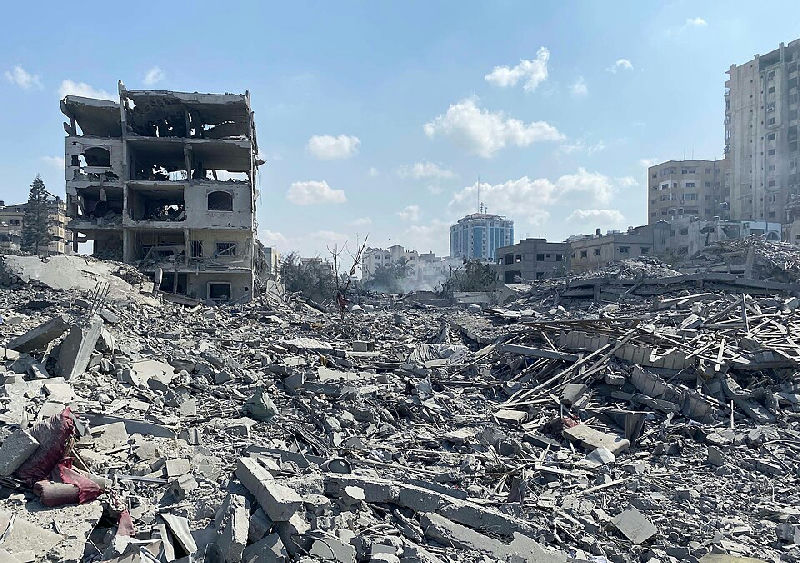
2023–present War (Al-Aqsa Flood / Iron Swords): From October 7, 2023, to the time of writing (May 2026). The initial Hamas attack on Israeli towns killed about 1,200 Israelis (mostly civilians) and took 250 hostages. In response, Israel launched the most brutal bombardment of Gaza. As of April 2026, over 35,000 Palestinians (70% women and children) have been killed and over 80,000 injured. More than 1.9 million people are displaced. Civilian infrastructure (hospitals, schools, mosques, churches, universities) has been systematically destroyed. Israel is facing a genocide case at the International Court of Justice. The International Criminal Court has issued arrest warrants for Netanyahu and Hamas leaders. Starvation and deprivation of water and medicine are used as weapons of war.
Conclusion: From 1948 to the present, Palestine under occupation, bombardment, and siege has witnessed tens of thousands of civilian martyrs, widespread home demolitions, forced displacement, and documented war crimes by international organizations such as Amnesty International, Human Rights Watch, and the UN.