War Information
10 sectionsThe Lašva Valley ethnic cleansing (1992-1993) represents one of the most thoroughly documented campaigns of persecution during the Bosnian War. The International Criminal Tribunal for the former Yugoslavia (ICTY) established that from May 1992 to April 1993, the political and military leadership of the Croatian Community of Herzeg-Bosnia (HZ-HB) implemented a coordinated plan to ethnically cleanse the Bosniak (Bosnian Muslim) civilian population from the Lašva Valley region of Central Bosnia.
The campaign, planned from May 1992 to March 1993 and executed in April 1993, was intended to implement objectives set forth by Croat nationalists in November 1991: "the Croatian people in Bosnia and Herzegovina must finally embrace a determined and active policy which will realise our eternal dream – a common Croatian state".
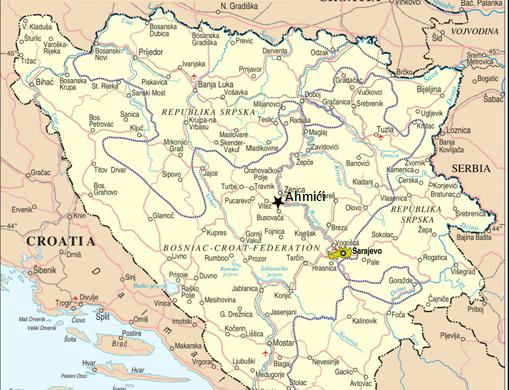
On April 16, 1993, at 5:30 a.m., the Croatian Defence Council (HVO) launched a widespread and systematic surprise attack on Bosniak civilians across the Lašva Valley. In the village of Ahmići alone, HVO forces killed more than 100 Bosniak civilians, including women and children, destroyed over 160 houses and two mosques, and slaughtered livestock. The ICTY Trial Chamber described Ahmići as comprising "one of the most vicious illustrations of man's inhumanity to man".
The ICTY concluded that by April 1993, the Croat leadership had a common design or plan conceived and executed to ethnically cleanse Bosniaks from the Lašva Valley. Dario Kordić, as the local political leader, was found to be the planner and instigator of this plan. The Tribunal further ruled that the Croatian Army was involved in the campaign, defining the events as an international armed conflict between Bosnia and Herzegovina and Croatia.