War Information
12 sectionsThe Bosnian War (1992–1995) was an international armed conflict that took place in Bosnia and Herzegovina following the breakup of Yugoslavia. After a referendum on independence on February 29 – March 1, 1992, which was boycotted by most Bosnian Serbs, Bosnia declared independence on March 3, 1992.
The war began in earnest on April 6, 1992, when Bosnian Serb forces, supported by the Yugoslav People's Army and Serbian paramilitaries under Slobodan Milošević, launched coordinated attacks to seize territory and expel non-Serb communities.
Key characteristics of the conflict:
- Bitter urban and trench warfare
- Indiscriminate shelling of cities, especially Sarajevo
- Systematic ethnic cleansing campaigns
- Mass rape as an instrument of war (20,000–50,000 women affected)
- Destruction of cultural and religious sites
The siege of Sarajevo lasted nearly 43 months — the longest blockade of a capital city in modern European history — killing approximately 11,000 people, including over 1,000 children.
The Srebrenica genocide in July 1995 saw more than 8,000 Bosniak men and boys executed by Bosnian Serb forces under General Ratko Mladić. The International Court of Justice and the ICTY later ruled this constituted genocide.
According to the Research and Documentation Center in Sarajevo's "Bosnian Book of the Dead" (2013), 97,207 confirmed names were recorded, with estimates suggesting approximately 100,000 total deaths. Over 2.2 million people — more than half the pre-war population — were displaced.
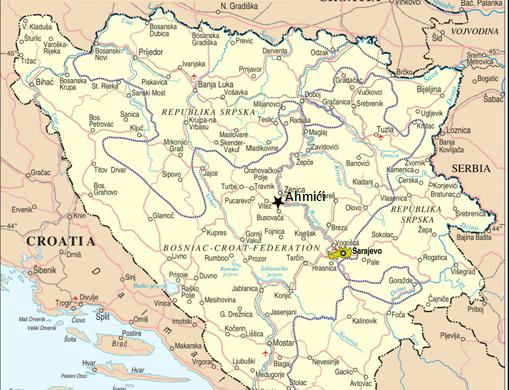
The war ended with the Dayton Peace Agreement, negotiated in Dayton, Ohio, and signed in Paris on December 14, 1995. The agreement preserved Bosnia as a single state divided into two entities: the Federation of Bosnia and Herzegovina and the Republika Srpska.
The International Criminal Tribunal for the former Yugoslavia (ICTY) convicted several key figures for war crimes, crimes against humanity, and genocide, including Ratko Mladić and Radovan Karadžić.