War Information
10 sectionsWars and Military History of Dover
Colonial Era and Founding (1683–1775)
Dover was founded in 1683 by William Penn as the court town for Kent County. The area that became Dover was originally Lenape territory, and early conflicts with European settlers began over land and trade rights. The Walking Purchase of 1737 seized Lenape lands through legal fraud and implied violence, displacing native populations throughout the region. Dover's location near the borders of several colonial powers made it strategically important during the French and Indian War (1754–1763), serving as a mustering point for militia. The town's position along key trade routes led to the construction of armories and militia gathering points during this period of colonial tension.
American Revolution and Statehood (1775–1783)
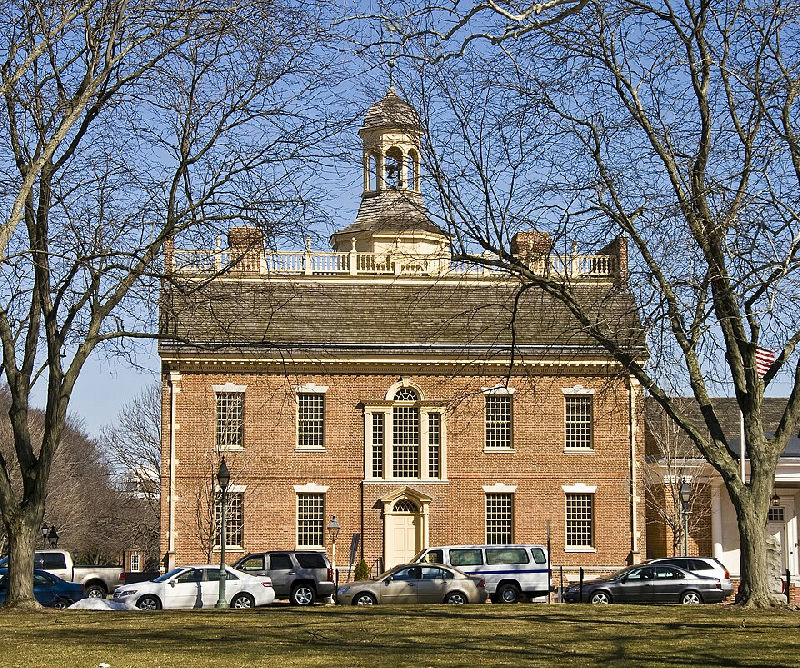
Dover played a pivotal role in the American Revolutionary victory. Local hero Caesar Rodney rode from Dover to Philadelphia on July 2, 1776, delivering Delaware's decisive vote for independence. The Dover Light Infantry, led by his brother Thomas Rodney, fought at the Second Battle of Trenton and the Battle of Princeton, with General Washington appointing them as his personal guard. In 1777, Delaware's capital was moved from New Castle to Dover—a relocation that underscored its strategic importance. The Dover Green served as a parade ground and mustering point for Continental soldiers. In September 1777, British and Hessian forces marched through Dover during their grand invasion to capture Philadelphia—disrupting life throughout Kent County. Dover citizens provided war materiel including arms, clothing, and food supplies regardless of racial lines. After the war, Dover hosted Delaware's ratification convention of 1787—making Delaware the first state to ratify the U.S. Constitution.
War of 1812 and the Bay Threat (1812–1815)
Although Dover was not directly attacked, the War of 1812 had a profound effect on the city. The British blockade of the Delaware Bay and Chesapeake Bay halted trade, devastated coastal shipbuilding, and drove mass migration inland to Kent County. Refugees from destroyed coastal hamlets like Lewes fled to Dover, causing food shortages and inflation. Kent County militia mobilized for coastal defense, with Dover serving as the logistical headquarters. The state government remained in Dover due to its inland location, while New Castle and Wilmington were occupied or threatened. Four Delaware merchant ships carrying corn were captured by the British, devastating the agricultural economy. After the war, Dover emerged as Delaware's firmly established capital, but the economic damage of the collapse of merchant shipping along the Delaware River took years to recover from.
Civil War and the Underground Railroad (1861–1865)
Delaware, as a border slave state, was deeply divided over slavery, and Dover was a center of this struggle. Caesar Rodney's home served as a station on the Underground Railroad, guiding fugitive slaves from Maryland to Pennsylvania. Dover's Quaker community organized emancipation efforts. Dover's free Black community actively participated in the Underground Railroad, hiding fugitives in homes and churches. In 1861, President Lincoln proposed a compensated emancipation plan for Delaware that failed by one vote in the General Assembly. When the 1st Delaware Regiment was formed, many Dover soldiers served. Delawareans fought at the Battle of Gettysburg in July 1863 with heavy casualties. The Emancipation Proclamation explicitly exempted Delaware's slaves, and slavery in the state technically continued until the Thirteenth Amendment was ratified in December 1865. Delaware did not ratify the Thirteenth Amendment until 1901. Fort Delaware on Pea Patch Island, near Dover, served as a Confederate prisoner-of-war camp where nearly 2,500 prisoners died.
Dover Air Force Base and Modern Conflicts (1941–Present)
Dover Air Force Base was established in 1941 and has since become the cornerstone of the city's military presence. Originally an army airfield, it later became a major Air Mobility Command hub. During the Cold War, C-130 and C-141 cargo aircraft flew from Dover to global flashpoints. The base houses the only military mortuary in the continental United States, receiving and processing the remains of soldiers killed in battle from the Vietnam War through Iraq and Afghanistan. This solemn responsibility has made Dover the gateway for the nation's fallen heroes. When a military aircraft carrying casualties arrives, entire communities line the transport route to pay respects—a ritual that has deeply shaped Dover's identity in modern conflicts. The base also responded to terrorist threats within the American homeland, serving as a medical evacuation center during Hurricanes Katrina and Maria. Additionally, Hurricane Isaias in 2020 brought an EF2 tornado to Dover, causing extensive damage—marking the longest tornado track in Delaware history.